Feeling John Henry
This week, for the first time, I decided to try out a coding agent using the Zed editor on a free pro trial. As a seasoned developer I have found patterns that suit my pace and personality so there is often resistance to trying out the latest new tool that might disrupt my workflow.
Of course, AI has already largely replaced much of my searching for answers from documentation, tutorials and Stack Overflow entries. I will also get coding suggestions and copy snippets from chatbots. However, as a software craftsman I feel ambivalent about completely opening up my personal workspace to the powerful yet invasive forces of AI.
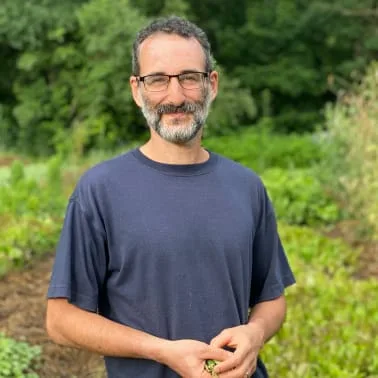
When not working at my computer you will often find me outside in my garden. With small scale agriculture you get a visceral experience of both the benefits and cost from using tools. With gardening, there is a clear boundary you cross once you get involved with mechanized devices. While your productivity increases dramatically so do your material costs and dependency on external resources and supply chains. You are also more removed from the long term impact on the soil and ecology that sustains us.
With AI encroaching on my profession as a computer software engineer I now face a similar choice. Here is a task that might take me fifteen minutes of tedious copying and pasting to complete. Even though I know exactly where the files are located and some pretty efficient keystrokes on my trusted primitive editor my fingers and single core brain can only move so fast.
On the other hand, in a few minutes I can compose a prompt for an agent in the Zed editor and if I explain myself clearly and the AI stars align I could end up with success and shave off quite a bit of time.
It occurs to me that for the first time in my career, the specter of obsolescence lurks in my own machine. I am reminded of the story of John Henry, the folklore hero who raced the newly invented steam powered drill to tunnel through a mountain with a chisel and sledge hammer. In the legend our hero competes at the pivot point of a new technology and is still able to keep up with and even win against the machine but only at the cost of collapsing from exhaustion.
In these early days of AI agents I can probably keep up and maybe even perform faster for simple tasks. However, the more I practice and get better at prompting and as the LLM models evolve and become more powerful, it will make less and less sense to physically compose and write my own code. Like John Henry, I will need to choose to adapt or perish.
However, it is worth taking some time to consider some of the larger impacts of these options. Though we are at the precipice of something completely revolutionary and novel, we have many historical precedents to refer to for wisdom and caution.
Take for example, the impact of industrial agriculture. Mechanization, fertilizers and genetic engineering has been credited with transforming human society, ending famine and the drudgery of an agrarian lifestyle.
On the other hand, one could argue that there has been incalculable loss to the ecological health and resiliency of the soils and environment that sustain us. Machines do not have the same relationship with the organisms that protect and sustain human beings. Less hands working the soil and fewer eyes directly observing the impacts means that we are vulnerable to destructive practices on a massive scale.
Today, when we purchase an amazing quantity and variety of food from the supermarket we have little connection with the impact of our choices. We are also disempowered from doing much about it since we are so dependent on the technology that has replaced the centuries of agricultural experience and wisdom now largely lost.
Am I embarking on a similar inevitable process of erosion as I choose to prompt an agent while I am completely detached from the short and long term environmental and cultural impacts? How much are my savings of time and effort subsidized by the reckless financial risks and ambitions of large corporations? How much future employment am I sacrificing to meet immediate deadlines? How much learning and experience am I foregoing, contributing to the atrophy of my craftwork?
While the immediate cost of AI tokens and savings in human work hours are easily tabulated it may take generations to realize the overall balance of AI’s impact on humanity. Will we once again become dependent on a new level of technology we lack the skills and knowledge to maintain and control? How much of our accumulated experience and expertise are we willing to surrender in the name of questionable progress?
I feel humbled by the enormity of the transformation we are presented with; changes we could not have foreseen even five years ago. I can only hope that our culture will find ways to adapt as it has through other major industrial revolutions. With any luck, there will still be a place for the software craftsmen just like the small scale homesteaders that find joy and satisfaction from tending their gardens.
If you’re looking for a team to help you discover the right thing to build and help you build it, get in touch.
Published on February 17, 2026